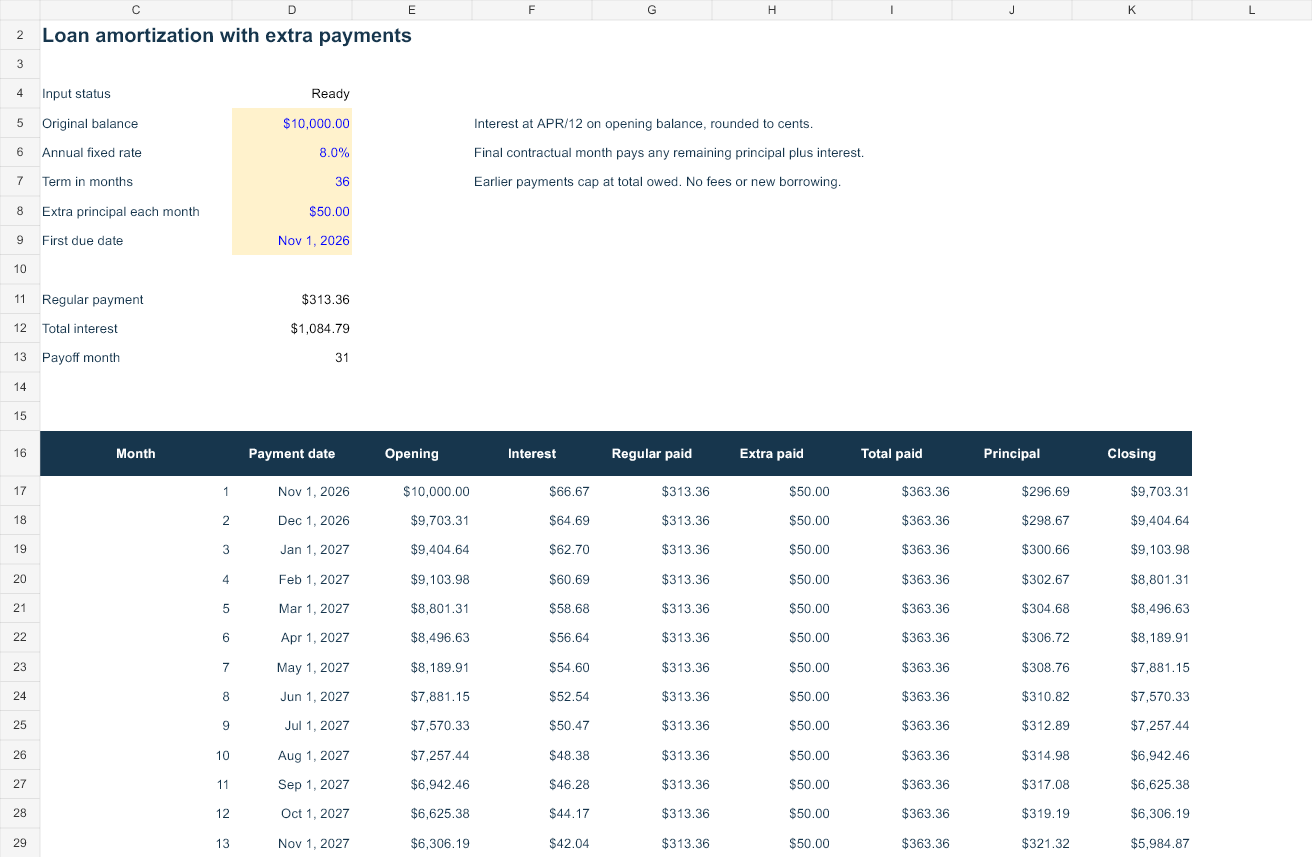
Model one fixed-rate instalment loan
Enter the original balance, annual fixed interest rate, contractual term in whole months, fixed extra principal payment and first due date. The file calculates the regular payment and a complete 360-row schedule. A term must be between one and 360 months. Unused rows after repayment show zero balances.
Interest is calculated on each month’s opening balance at annual rate divided by twelve and rounded to cents. The regular payment uses the standard level-payment annuity formula, rounded to cents. At a zero rate, principal is divided by the term. Extra payments reduce principal after the scheduled payment and cannot exceed the remaining amount owed.
Final-payment convention
Cent rounding can leave a small residual at the contractual final month. This model explicitly pays the remaining principal and that month’s interest in that month. The final regular amount can therefore differ from the rounded regular payment. Earlier payments are capped at total owed, and no extra amount is paid after the balance reaches zero.
This convention is a modelling assumption, not a promise about a lender’s payoff quotation. Actual loans may accrue daily interest, charge prepayment fees or require instructions for allocating an extra payment. Check the contract and obtain a current payoff quote when closing a real loan.
Reproduce the example
A $10,000 balance, 8% annual rate and 36-month contractual term produce a $313.36 regular monthly payment under the stated rounding convention. Adding $50 each month produces a modelled payoff in month 31 and $1,084.79 total interest. The schedule separates opening balance, interest, regular amount, extra amount, total paid, principal and closing balance.
Review before relying on the output
- Replace every blue assumption, preserving a numeric zero when no extra payment applies.
- Inspect the first payment, a middle month and the payoff row.
- Confirm opening plus interest minus total paid equals closing.
- Reconcile the model’s interest timing and final-payment convention with your contract.
- Save a dated working copy and keep the original example unchanged.
The file does not estimate APR from fees, compare competing offers, model variable rates, add escrow or insurance, or decide whether refinancing is worthwhile. It is a transparent fixed-rate amortization schedule with a constant entered extra payment.
Open, edit and save
Open the XLSX in desktop Excel and save a working copy before changing blue inputs. Native Excel recalculation, representative input changes and save/reopen are checked before publication. Google Sheets can import XLSX through File → Import → Upload, but native Sheets rendering and calculation have not been verified. Review formulas, date handling and charts after conversion.
Your edited workbook stays on your device or the storage service you choose. This page serves files and runs an optional local browser model. It does not connect to creditors, collect account identifiers or upload your financial records. Normal hosting can log page and file requests.
Sources and calculation basis
The CFPB description of debt reduction strategies explains paying minimums across debts and directing extra money to a selected priority. Its explanation of credit-card interest describes why real statements may use daily balances and different rates. These sources support the concepts. All workbook layouts, monthly model conventions and invented USD examples here are AllMarkets material.