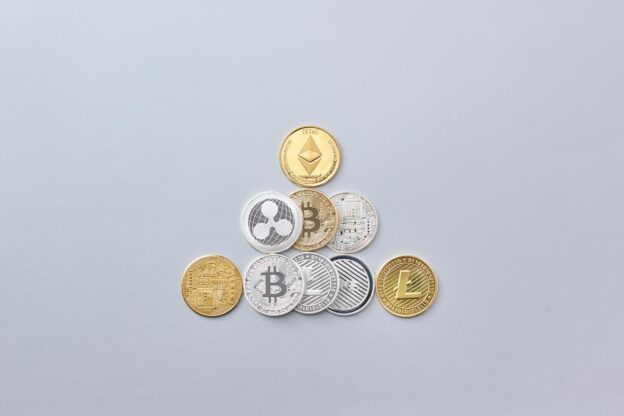
Amid March 2026’s market turbulence, stablecoins have outperformed their privacy-focused counterparts like Monero and Zcash, securing a significant increase in global transaction volumes. This surge reflects a shift in investor preference towards more stable and predictable assets during periods of financial uncertainty. While privacy coins typically attract attention for their ability to shield user identities, the current economic climate has prioritized asset stability and reliability, leading to a broader adoption of stablecoins across various financial sectors.
Table of Contents
- Why Market Volatility in March 2026 Is Different
- Debunking the Privacy Coin Safety Net
- The Rise of Stablecoins: A Data-Driven Analysis
- Case Study: Tether's Stability During the March 2026 Market Dip
- How to Integrate Stablecoins into Your Investment Strategy
- Considering the Limitations of Stablecoins
- Where to Start This Week
Why Market Volatility in March 2026 Is Different
The market volatility observed in March 2026 stands distinct from previous fluctuations due to a confluence of unique economic and geopolitical factors. This period marks an essential pivot in the cryptocurrency landscape, notably influenced by contrasting performances and strategic shifts within the sector. As privacy-focused altcoins like Monero and Zcash capture headlines with significant price movements, a deeper analysis unveils that stablecoins are emerging as the true stabilizers in this turbulent environment.
Consider the performance metrics from March 2026 provided by Mexc and Coinpedia: Zcash experienced a dramatic surge, gaining 16.1% in one day, pushing its price to $269.92 with a trading volume that represents a 156% increase from the previous month. Similarly, Monero showed resilience with a 3.3% daily gain, suggesting a shift from a bearish to an upward trend according to Binance. Despite these gains, the broader picture indicates underlying volatility; Zcash, for instance, while up weekly, remained down by 12.9% on a monthly basis as per Mexc.
Amid these fluctuations, stablecoins demonstrated an unyielding steadiness. Their value proposition as pegged to less volatile assets makes them inherently less susceptible to the whims of market sentiment, which in times of geopolitical stress or economic uncertainty, becomes a significant asset. This stability is not just theoretical but is reflected in the increasing adoption rates and the growing preference among investors for predictable, low-risk assets amidst the chaos.
Furthermore, the divergent regulatory landscapes for privacy coins and stablecoins add another layer of complexity. While privacy coins face increasing scrutiny that could threaten their viability, stablecoins enjoy a relatively more straightforward regulatory path, bolstering their position as a safe haven in volatile times.
The strategic shift towards stablecoins is underpinned by their ability to offer security and stability, attributes that are highly prized in uncertain times. This trend suggests a reevaluation of investment strategies, favoring assets that can provide peace of mind over those offering high returns at high risk. Thus, while privacy-focused altcoins like Monero and Zcash offer significant advantages and cater to a specific market niche, stablecoins command a growing consensus for their reliability and safety in the face of market upheavals.
Debunking the Privacy Coin Safety Net
Many investors mistakenly believe that privacy coins like Monero and Zcash are the safest bets during market fluctuations due to their anonymity features. However, this belief does not hold up under scrutiny, especially when contrasted with the stability of stablecoins in recent market conditions.
For instance, Zcash, despite its impressive surge of 16.1% in a single day and a weekly gain of 22.8%, still showed a monthly downturn of 12.9%. Such volatility undermines the notion of safety associated with privacy coins. Similarly, Monero, while gaining 3.3% daily, displayed fluctuations that could deter investors looking for stability in tumultuous times.
On the other hand, stablecoins, designed to be pegged to stable assets like USD, provide a stark contrast in stability. They are specifically engineered to absorb shocks during market turbulence, making them a more reliable safe haven than privacy-focused altcoins.
Here’s a closer look at how privacy coins stack up against each other and why they fall short of being a safe investment compared to stablecoins:
| Coin | 24-Hour Surge | Weekly Gain | Monthly Performance | Volatility Index |
|---|---|---|---|---|
| Zcash | +16.1% | +22.8% | -12.9% | High |
| Monero | +3.3% | +6.93% | Variable | Medium |
While privacy coins like Monero and Zcash offer significant advantages for user anonymity, their market performance during turbulence reveals a pattern of high volatility. Investors seeking stability in uncertain times are better off considering stablecoins, which are designed to maintain their value regardless of market conditions.